News
Apr 22, 2026
Tech Updates
Enterprise
Artificial Intelligence
Americas

NewDecoded
3 min read
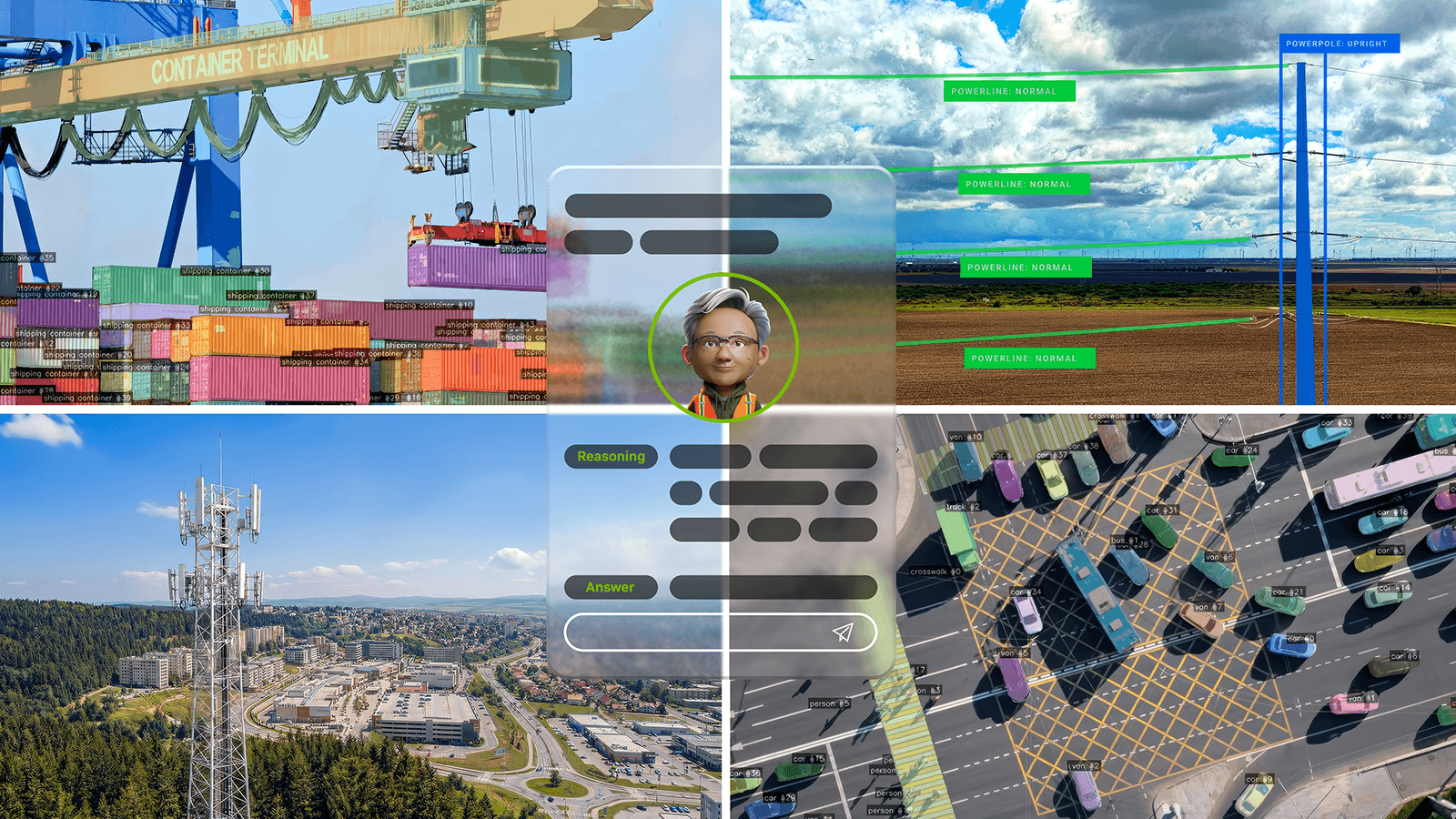
Image by Nvidia
NVIDIA and T-Mobile announced a major collaboration at GTC 2026 to integrate physical AI applications across distributed edge networks. Working alongside Nokia, the partners are shifting 5G infrastructure from simple connectivity pipes into active, high-performance computing hubs. This new AI-RAN architecture allows developers to deploy vision agents that perceive and act upon the physical world in real time across cities and industrial sites.
The infrastructure relies on NVIDIA ARC-Pro and NVIDIA RTX PRO 6000 Blackwell Server Edition hardware. These systems are being piloted at T-Mobile cell sites and mobile switching offices to handle heavy AI inference workloads. By processing data at the network edge, the system reduces the need for expensive hardware on individual robots or cameras while ensuring ultra-low latency connectivity. Developers are already utilizing the NVIDIA Metropolis Blueprint for video search and summarization to create sophisticated reasoning agents. The latest VSS 3 version allows these agents to understand natural language queries and find specific video events in under five seconds. This technology is currently being evaluated for smart city operations in San Jose to optimize traffic signals and accelerate incident response times.
In industrial and utility settings, companies like Fogsphere and Levatas are using the network to monitor safety and critical infrastructure. Drones can now inspect thousands of miles of utility lines to detect corrosion or leaning poles five times faster than traditional methods. These agents operate 24/7 over secure 5G connections, providing a scalable solution for predictive maintenance in high-risk offshore and drilling environments. NVIDIA CEO Jensen Huang describes these modernized towers as a Robotic AI Radio. This framework enables the network to not only support external AI but also optimize its own performance. By reasoning about traffic patterns, the towers can adjust radio frequency beams to save energy and improve signal fidelity, creating a self-optimizing nervous system for the physical world.
This collaboration represents a fundamental pivot for telecommunications companies seeking to capture value in the projected $1 trillion AI inference market. By converting physical real estate into decentralized token factories, telcos are evolving from basic utility providers into essential AI infrastructure players. This shift addresses the primary bottleneck of physical AI, which is the requirement for ultra-low latency that centralized clouds cannot provide. It signals a future where intelligence is as ubiquitous and accessible as a standard cellular signal.
Related Articles