News
Apr 22, 2026
News
Enterprise
Artificial Intelligence
Americas

NewDecoded
3 min read
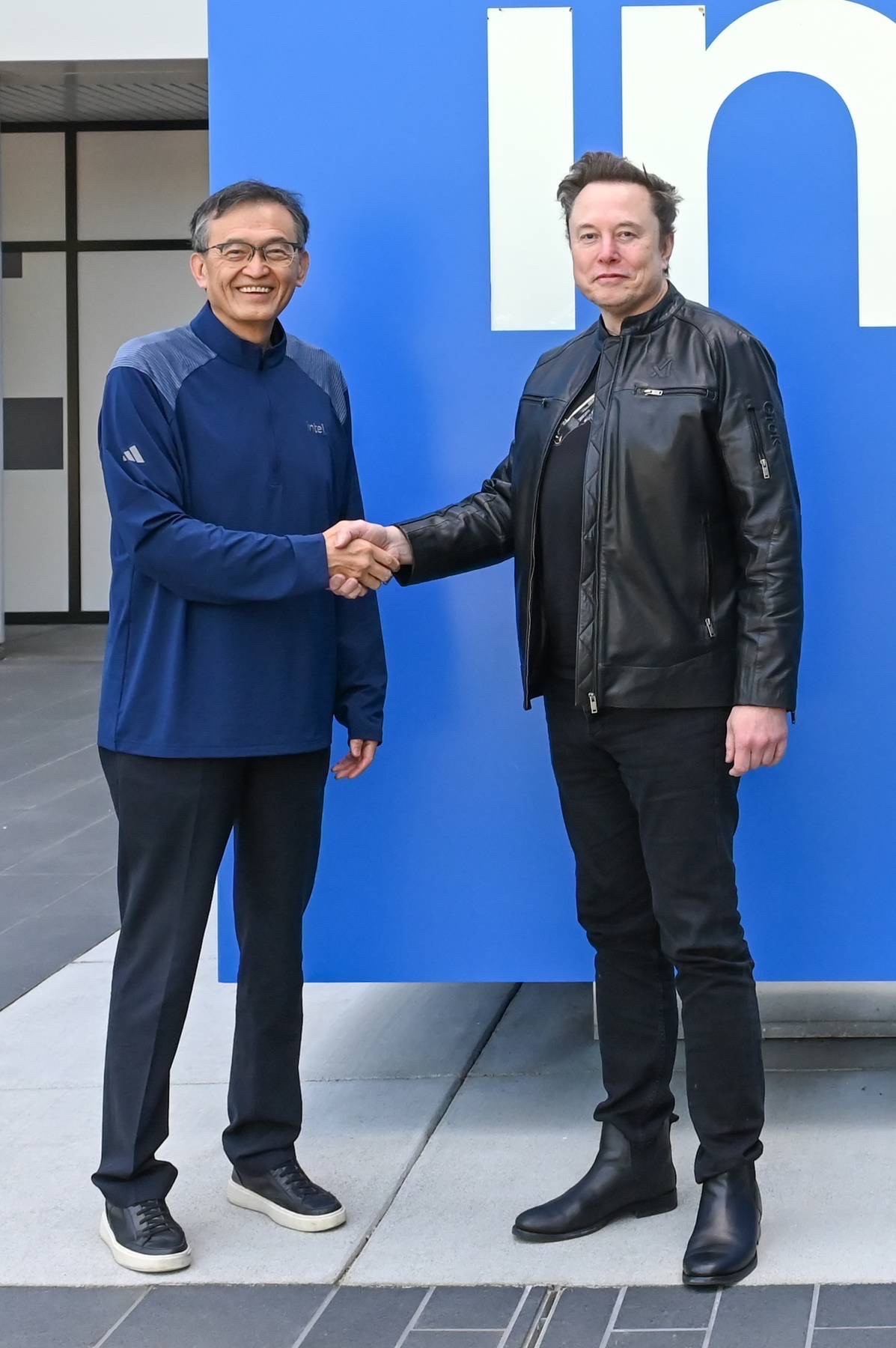
Image by Intel
Intel is officially joining forces with Elon Musk, SpaceX, xAI, and Tesla for the ambitious $25 billion Terafab initiative. This partnership aims to refactor silicon fabrication technology to support a massive goal of one terawatt per year of compute power. The announcement follows a collaborative weekend visit by Musk to Intel facilities where leaders discussed the future of high performance silicon.
Intel will leverage its industry leading expertise in chip design and advanced packaging to accelerate the project’s aims. By utilizing its global manufacturing scale, the company will help produce the ultra high performance chips needed for next generation AI applications. This synergy is expected to transform how high power silicon is brought to market to fuel future advances in robotics. This manufacturing push aligns with Intel’s recent release of the Xeon 600 processors and Arc Pro B-Series GPUs. These technologies are already setting benchmarks in local AI inferencing and heavy duty workstation compute tasks. Such hardware serves as the technical foundation for the massive workloads envisioned by the Terafab project.
The collaboration highlights Intel's recent status as one of the most innovative companies in America, as recognized by Fortune. Its new Core Ultra Series 3 processors further demonstrate a commitment to breakthrough efficiency and performance across mobile and desktop platforms. This track record of foundational innovation makes Intel an ideal partner for refactoring global fabrication technology. By scaling production to unprecedented levels, the Terafab project intends to provide the hardware necessary for future breakthroughs in planetary scale intelligence. Intel's involvement signals a strategic shift in how the industry addresses the global demand for massive computational capacity. The project represents a bold step toward a future where reliable silicon infrastructure powers the most demanding AI models.
This partnership marks a tectonic shift in the semiconductor landscape by bridging traditional foundry expertise with the aggressive vertical integration strategies of Musk’s enterprises. For the industry, Intel’s role in Terafab validates its advanced manufacturing nodes as a cornerstone for future AI infrastructure while highlighting a transition toward sovereign compute at a terawatt scale. By aligning with Tesla and xAI, Intel is not just selling chips but is fundamentally redesigning the fabrication process to meet the exponential demands of autonomous systems and large language models. This move solidifies Intel's position as an indispensable partner in the global AI race, moving beyond consumer hardware into the very foundation of planetary scale intelligence.
Related Articles