News
Apr 22, 2026
Tech Updates
Enterprise
Artificial Intelligence
Americas

NewDecoded
4 min read
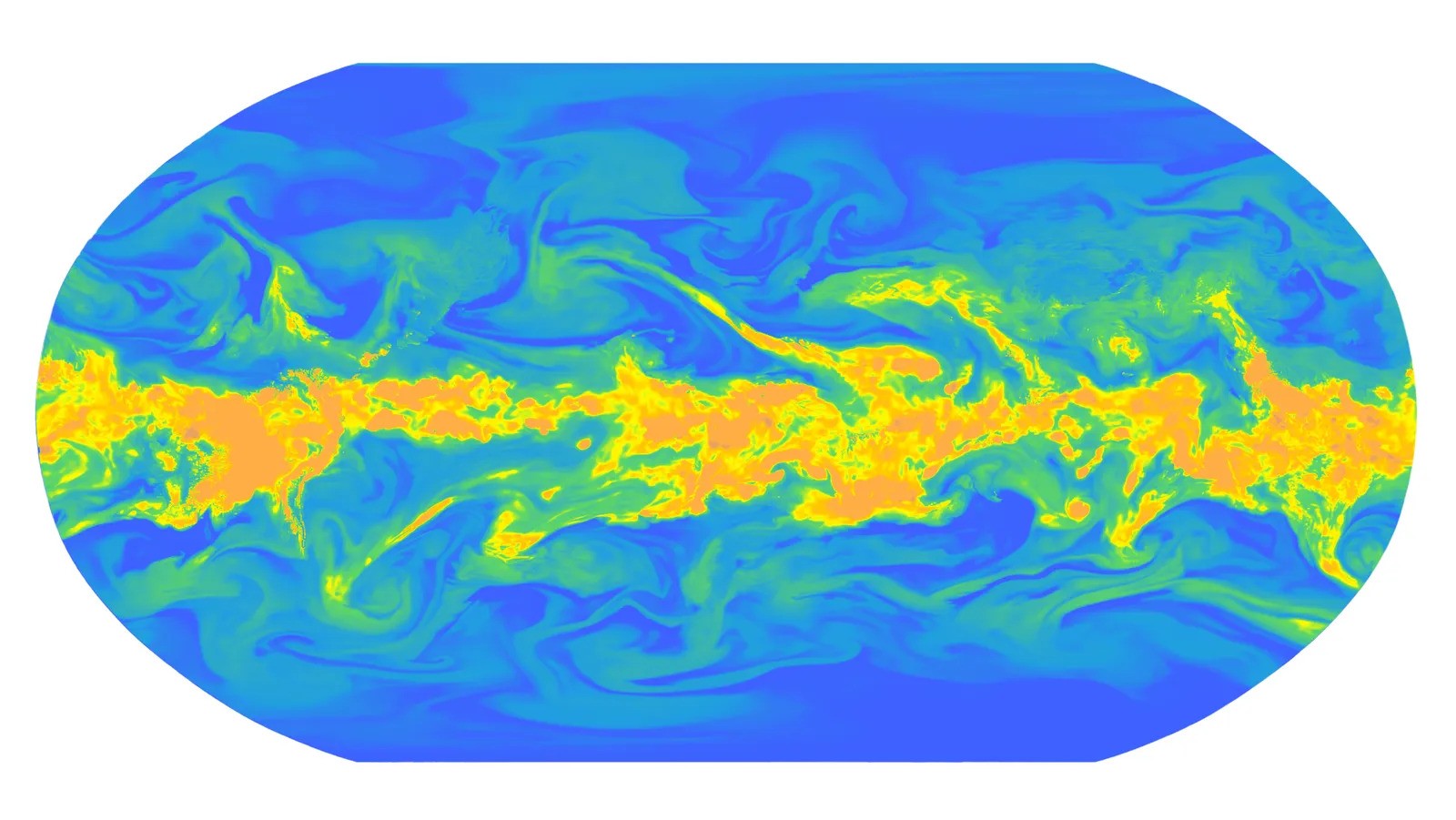
Image by Google
Google DeepMind and Google Research released WeatherNext 2 on November 17, 2025, delivering weather forecasts eight times faster than its predecessor while improving accuracy across 99.9% of meteorological variables. The AI model generates hundreds of possible weather scenarios from a single starting point in less than 60 seconds using just one tensor processing unit (TPU), a task that would take hours on traditional supercomputers. The technology is already powering weather information across Google Search, Maps, Gemini AI assistant, and Pixel Weather apps.
At the core of WeatherNext 2 sits a Functional Generative Network (FGN), a new AI approach that injects strategic "noise" into the model architecture to create physically realistic forecasts. The model trains only on individual weather elements like temperature or humidity at specific locations, yet learns to predict complex interconnected systems such as regional heat waves or wind farm power output. This capability addresses a critical challenge in meteorology: capturing worst-case scenarios and the full range of weather possibilities essential for planning decisions.
Google is democratizing access through multiple channels, making WeatherNext 2 forecast data available in Earth Engine and BigQuery. An early access program on Google Cloud's Vertex AI platform enables businesses to create customized forecasting models. Weather agencies have already utilized the technology for experimental cyclone predictions, making critical decisions based on multiple scenario forecasts.
The model delivers forecasts at resolutions down to one-hour intervals, generating four six-hour forecasts daily. This temporal granularity represents a significant improvement over previous systems, providing meteorologists and decision-makers with more detailed information for time-sensitive applications. WeatherNext 2 demonstrates particular strength in forecasting crucial variables including wind speed and direction, precipitation, and atmospheric pressure across lead times ranging from zero to 15 days.
Google's integration strategy spans consumer applications, enterprise platforms, and research tools, positioning WeatherNext 2 for widespread adoption across sectors. Global supply chains, aviation operators, and individual users all gain access to more accurate predictions for route planning, safety decisions, and daily activities. The company has committed to continued advancement, including integration of new data sources and expanding access further to accelerate scientific discovery and empower researchers, developers, and businesses worldwide.
WeatherNext 2 represents Google's calculated move to dominate the emerging AI weather forecasting market, following its earlier GraphCast and GenCast models. By rapidly deploying across its entire ecosystem while simultaneously opening access to developers and researchers, Google is establishing both consumer lock-in and platform standardization.
The 8x speed improvement and sub-minute processing on single chips threatens traditional meteorological infrastructure that relies on expensive supercomputers, potentially reshaping who controls weather prediction capabilities. This democratization strategy mirrors Google's broader AI playbook: build superior technology, integrate it everywhere users already are, then make it indispensable for developers and enterprises.
Weather agencies and private forecasting companies now face a choice between competing with free, highly accurate AI models or becoming dependent on Google's infrastructure.
Related Articles