
News
Dec 30, 2025
News
Enterprise
Artificial Intelligence
Asia
NewDecoded
3 min read
Image by CarBlogIndia
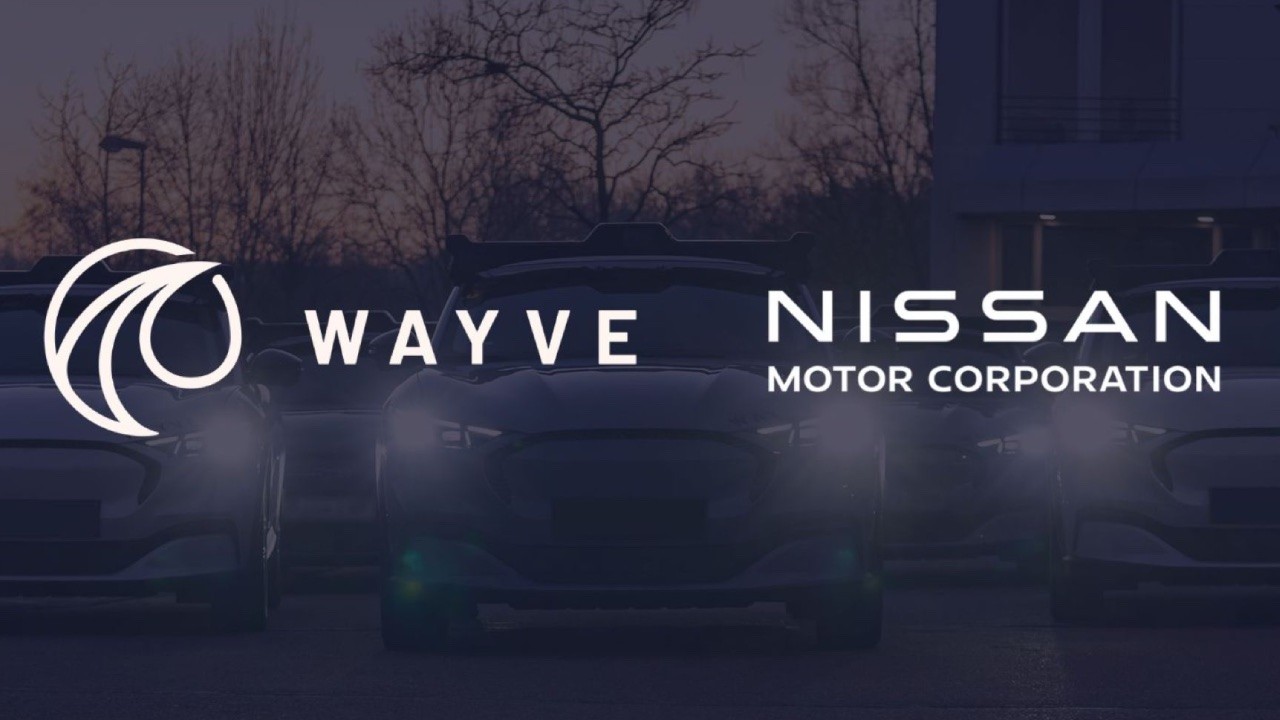
Nissan Motor Co., Ltd. and UK-based AI startup Wayve have officially signed definitive agreements to integrate cutting-edge "Embodied AI" into future Nissan vehicles. This collaboration aims to transform the ProPILOT driver assistance series by moving away from traditional rule-based programming toward a more flexible, AI-driven architecture. The first vehicles featuring this technology are expected to launch in Japan in fiscal year 2027. The core of this partnership involves Wayve’s end-to-end deep learning software, which allows cars to navigate without the need for expensive high-definition maps. By processing sensor data in real-time, the Wayve AI Driver can adapt to new cities and traffic scenarios just as a human driver would. This approach is designed to work across a broad range of vehicle segments, making advanced autonomy accessible to more than just luxury buyers.
Nissan is positioning itself uniquely against the competition by combining Wayve’s AI with its own advanced hardware suite. While rivals like Tesla focus on vision-only systems, Nissan utilizes Ground Truth Perception technology featuring next-generation LiDAR and radar. This creates a redundant safety layer that ensures the vehicle remains reliable in complex urban environments and poor visibility where cameras alone might struggle.
This agreement serves as a key pillar for Nissan’s long-term business strategy, known as The Arc. By deploying these systems at scale, Nissan will collect vast amounts of diverse driving data to continuously improve its intelligent driving features. This data-driven approach is expected to provide a significant competitive advantage in the global race for truly autonomous mobility. The partnership also validates Wayve’s approach to AV 2.0, moving the startup from research into full-scale production with a major global OEM. With backing from major tech investors including SoftBank and NVIDIA, the collaboration has the financial and technical resources to redefine the future of the car. For consumers, this means the eventual arrival of point-to-point driving that feels more intuitive and less restricted by geographic boundaries.
The automotive industry is currently transitioning from "AV 1.0" systems, which rely on brittle rules and pre-scanned maps, to "AV 2.0" systems that use adaptable neural networks. Nissan is the first global automaker to commit to this shift at a mass-production scale, effectively betting that mapless AI is the only viable way to achieve true autonomy.
By pairing Wayve’s AI with LiDAR hardware, Nissan is attempting to create a safer, more robust alternative to vision-only systems like Tesla’s Full Self-Driving. This move signals that the next phase of the autonomous race will be won by those who can generalize driving intelligence across diverse global markets without constant infrastructure updates.